← Stories

The Great Leaf Parade

Discover more

Swipe to turn the page · Scroll to read
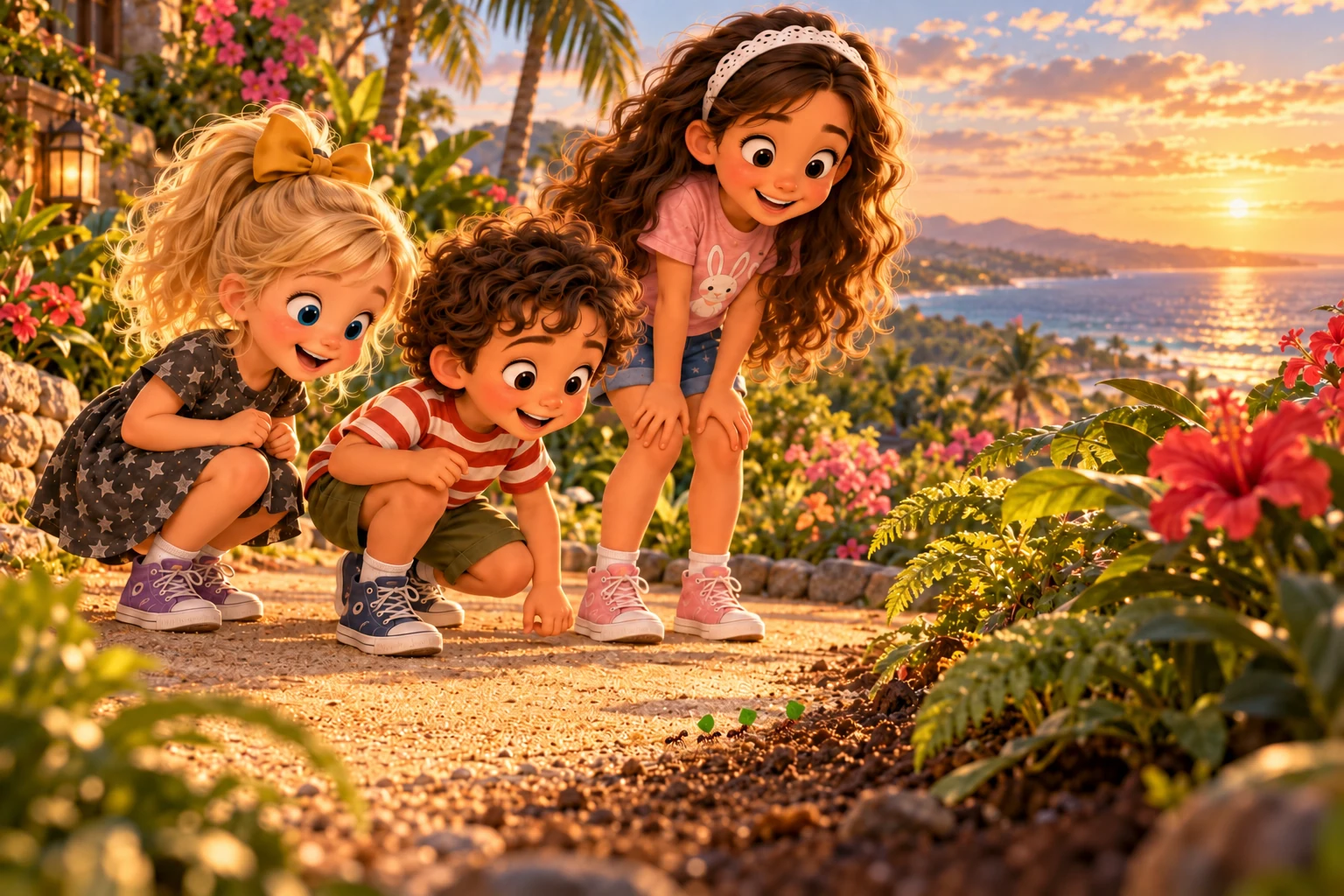
Liam, Charlotte, and Grace watch a few tiny ants carrying green leaf pieces beside a sunlit coastal garden path.

Page 01

A leaf with somewhere to go

The sea was sparkling beyond the garden when a piece of leaf walked across the path.

Liam stopped. Charlotte nearly bumped into him.

“Leaves don’t walk,” she said.

Another leaf hurried past. Then another.

Liam crouched well away from their path.

“Leaf by leaf, where do you go?”
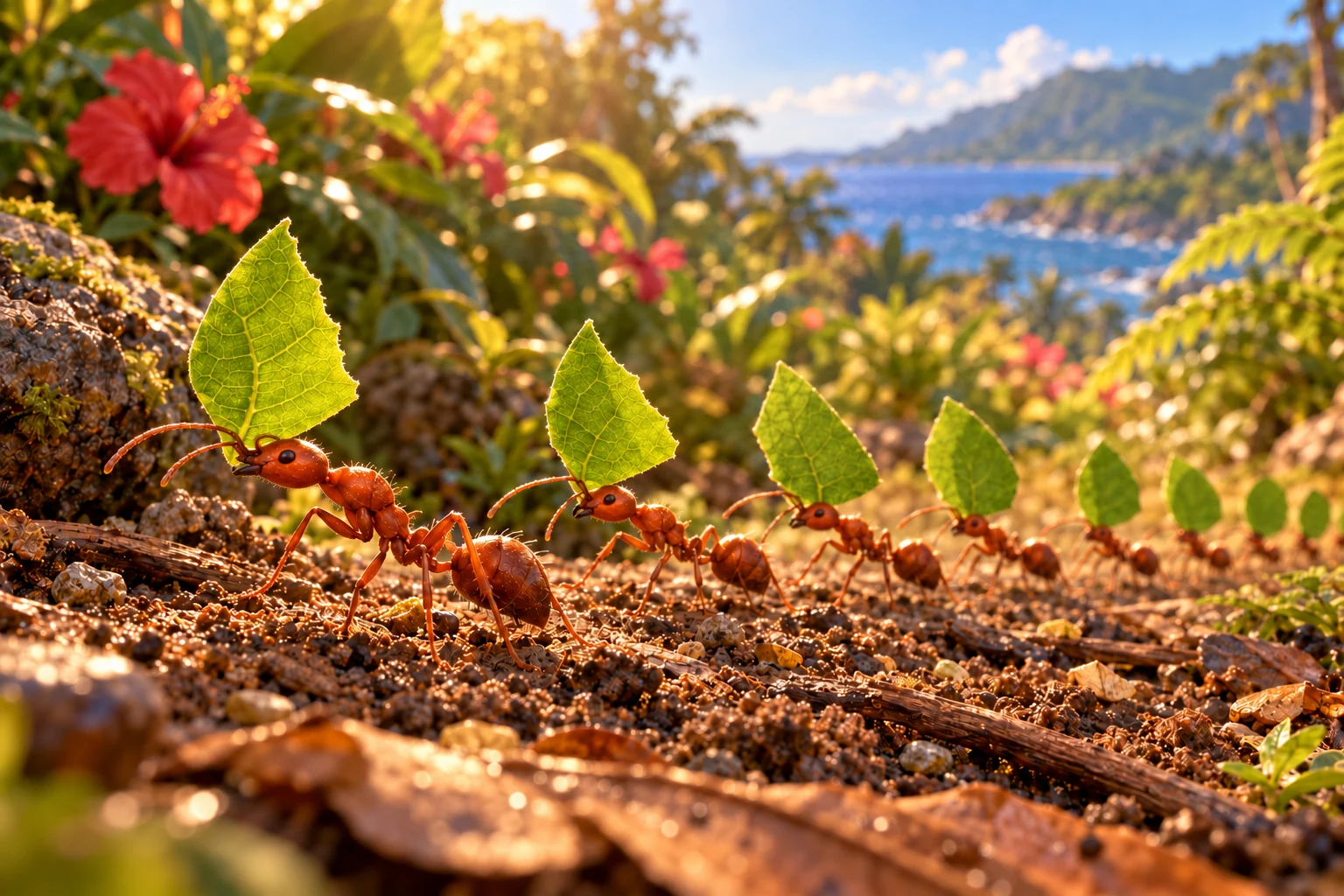
Reddish-brown leafcutter ants carry upright green leaf fragments across pebbly garden soil.

Page 02

Six legs underneath

Tiny brown legs moved beneath the green pieces.

“Ants!” said Grace.

One carried a leaf shaped like a little sail. Another carried a wobbly triangle.

Mom joined them. “Leafcutter ants. They cut pieces from plants and carry them home.”

Charlotte nodded importantly.

“A picnic. Obviously.”

Liam pictured the smallest sandwiches in the world.
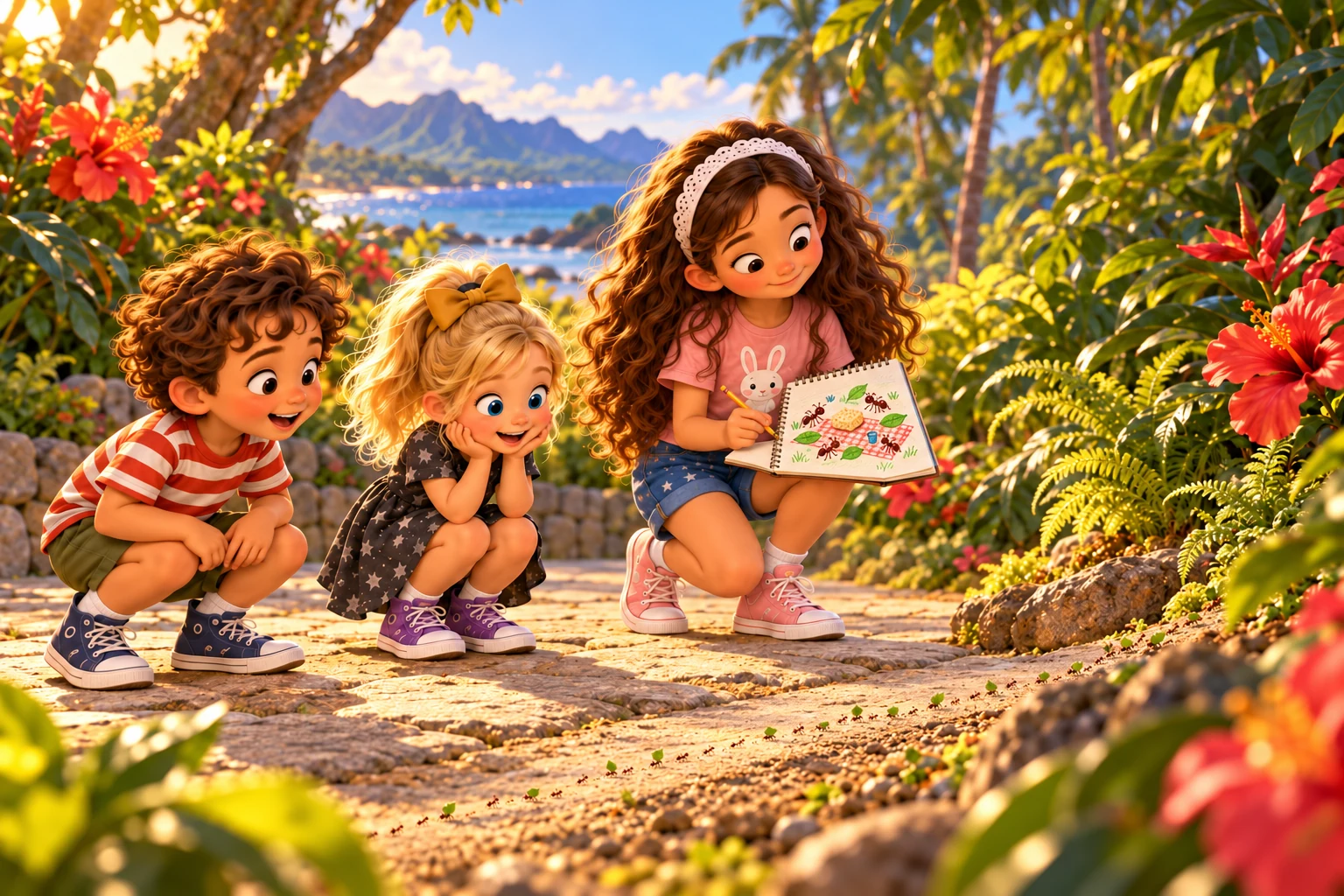
Charlotte holds a notebook drawing of an imagined ant picnic while Liam and Grace crouch safely beside the real ant trail.

Page 03

The picnic problem

Charlotte drew an ant picnic in her notebook: leaf plates, tiny cups, one enormous crumb.

“Who brings the blanket?” Liam asked.

Grace watched the real parade.

“They’re all going past that lovely shady spot.”

Past the shade. Past a flower. Into the roots.

Charlotte lowered her pencil.

“Perhaps their picnic is somewhere else.”

Pause & wonder

What do you think the ants will do with the leaves? Which clue could help you check your idea?
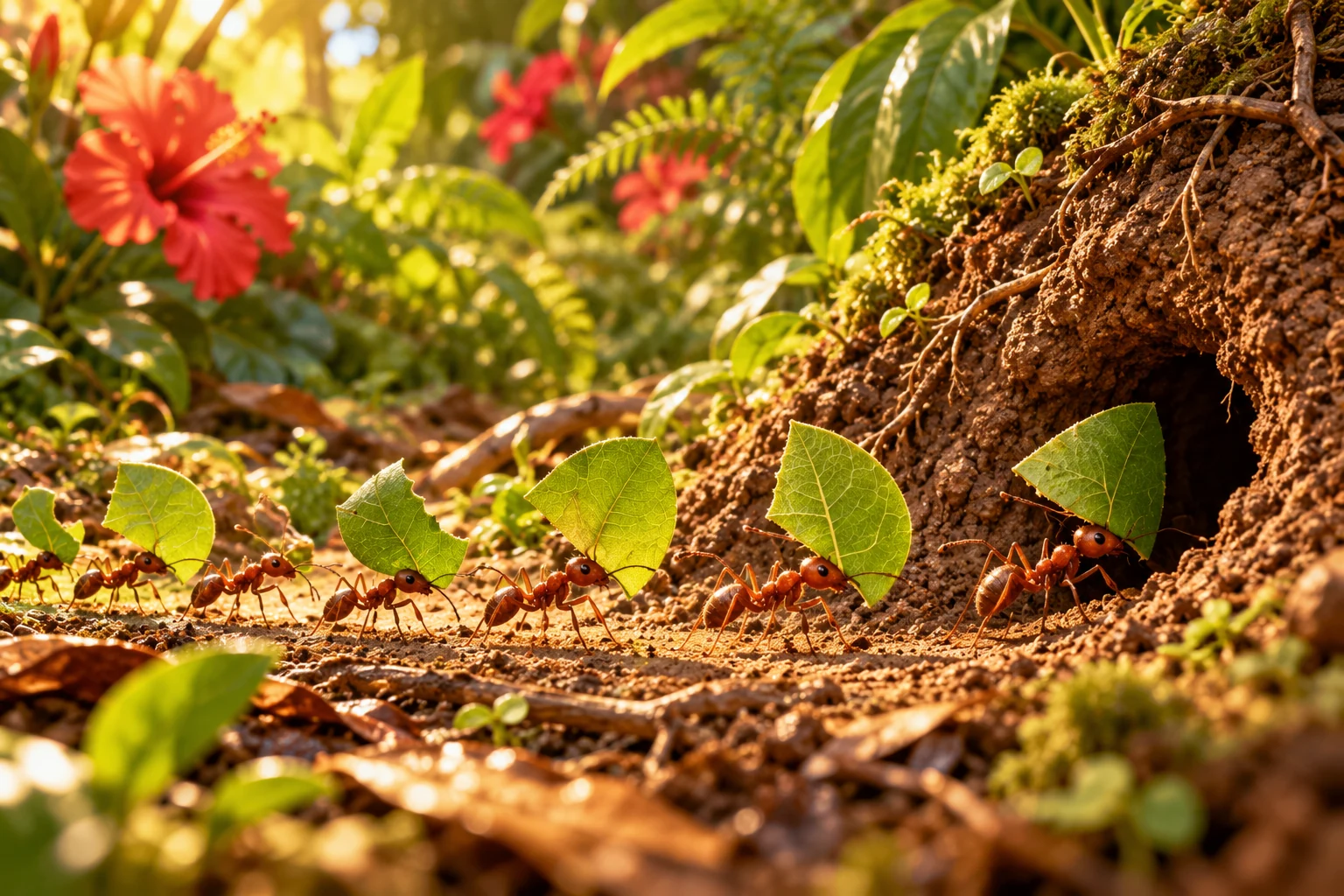
Leafcutter ants carry green leaf pieces toward a small undisturbed nest entrance among roots.

Page 04

Down went the green

The ants carried their leaves into a little opening in the soil.

One green triangle tipped sideways.

Then it vanished.

“Leaf by leaf, where do you go?” Liam whispered.

Nobody poked the hole. Nobody lifted the roots.

“We can’t see what happens down there,” Grace said.

Mom smiled. “I know a book that can help.”
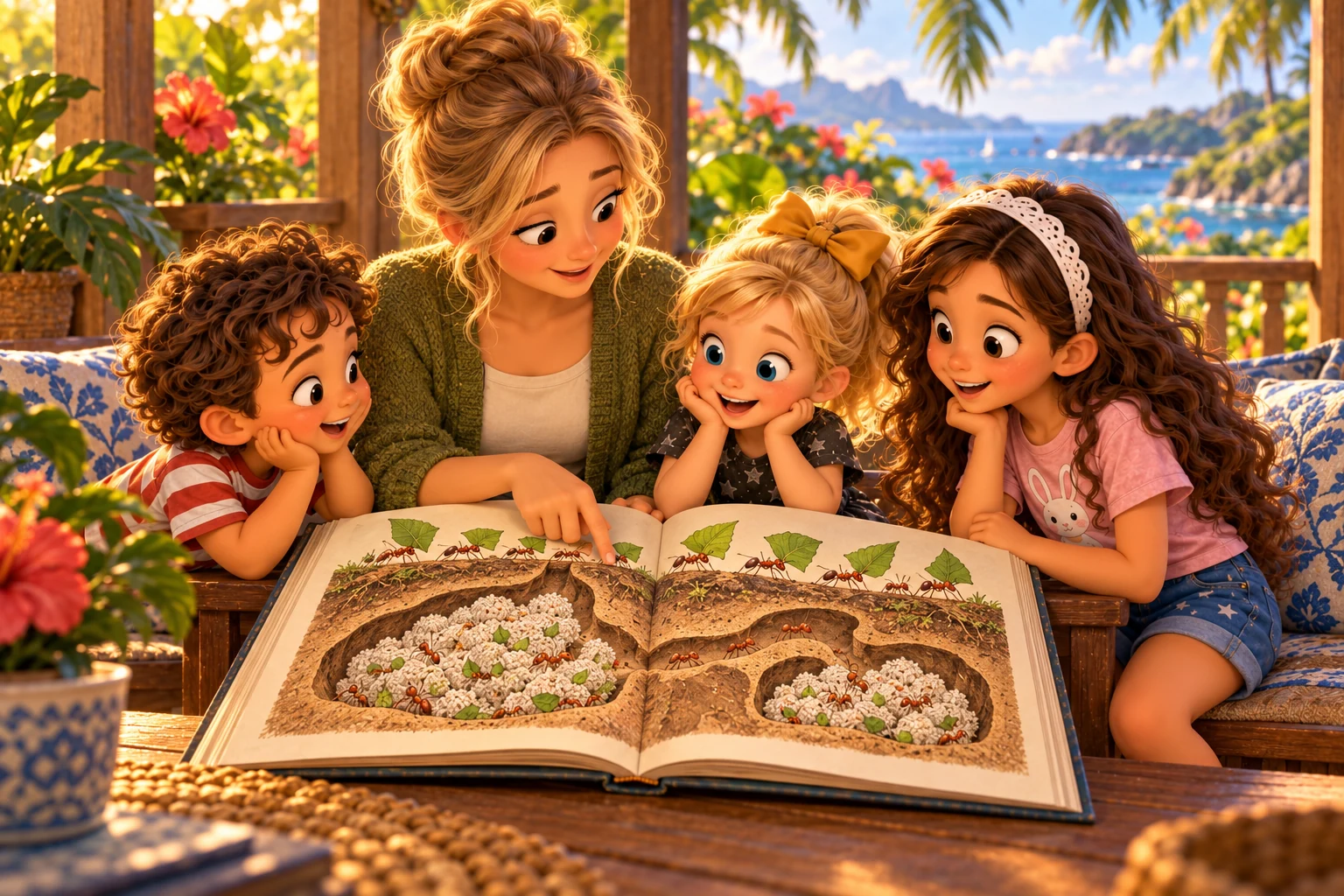
Mom and all three children study a nature-book picture of underground tunnels and pale fungus gardens on the veranda.

Page 05

A garden in the dark

On the veranda, Mom opened the nature book.

Its picture showed tunnels and underground rooms filled with pale, lumpy gardens.

“They grow a fungus,” she read. “The leaves help feed it.”

“A garden without sunshine?” Charlotte asked.

“Fungi get food differently from green plants.”

Liam looked from the picture to the garden outside.

“There’s another garden underneath ours!”
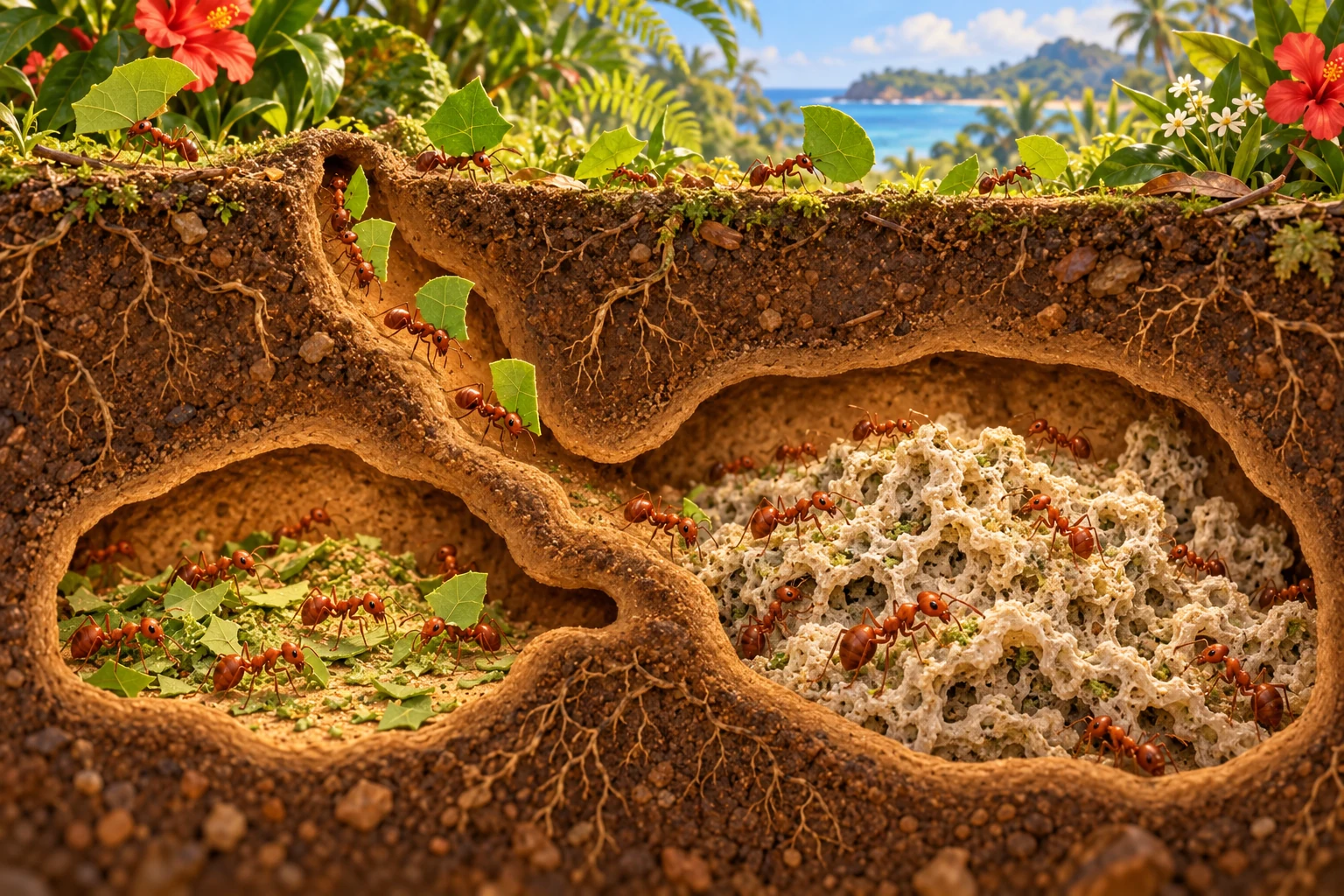
An enlarged illustrated cutaway shows ants carrying leaves underground, preparing plant pieces, and tending a pale, sponge-like fungus garden.
An illustrated cutaway: a simplified view of a hidden fungus garden, not something the children dug up. Sizes are enlarged.

Page 06

Who feeds whom?

They followed the pictures.

Worker ants chewed leaf pieces into smaller bits for the fungus garden.

The fungus grew on that leafy mixture.

The ants ate food grown by the fungus.

Charlotte tapped the page.

“So the ants feed their garden…”

“…and their garden feeds the ants!” Liam finished.

He giggled.

“That is a very complicated picnic.”
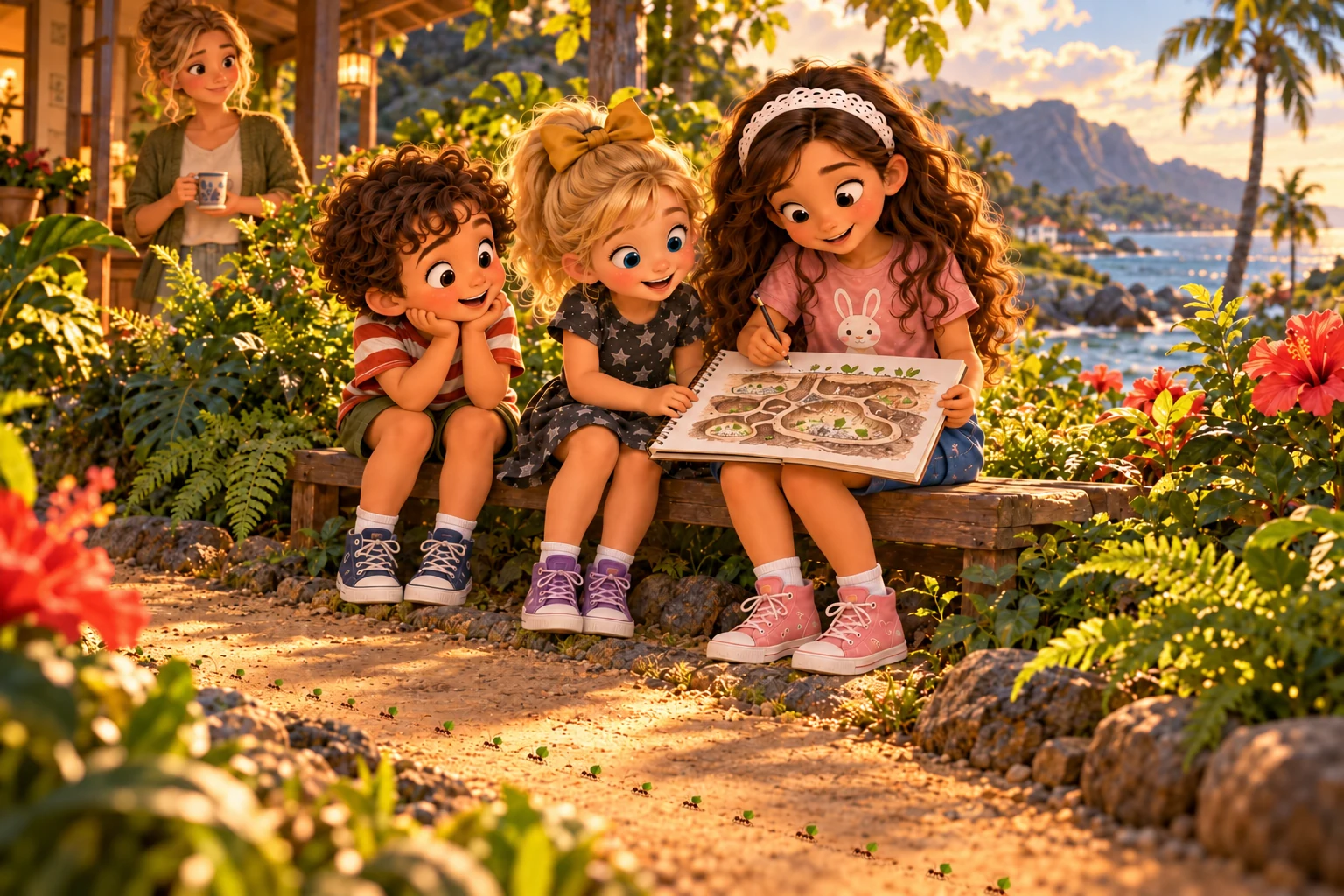
Charlotte draws underground fungus gardens in her notebook as Grace and Liam sit beside her, safely back from the tiny ants.

Page 07

Room for another idea

Back beside the path, Charlotte looked at her notebook.

“My picnic was wrong.”

Grace turned to a fresh page.

“Now you have something new to draw.”

Charlotte began an underground garden.

Liam kept his toes well back from the passing ants.

“Leaf by leaf, where do you go?”

This time, all three answered:

“To help a hidden garden grow!”
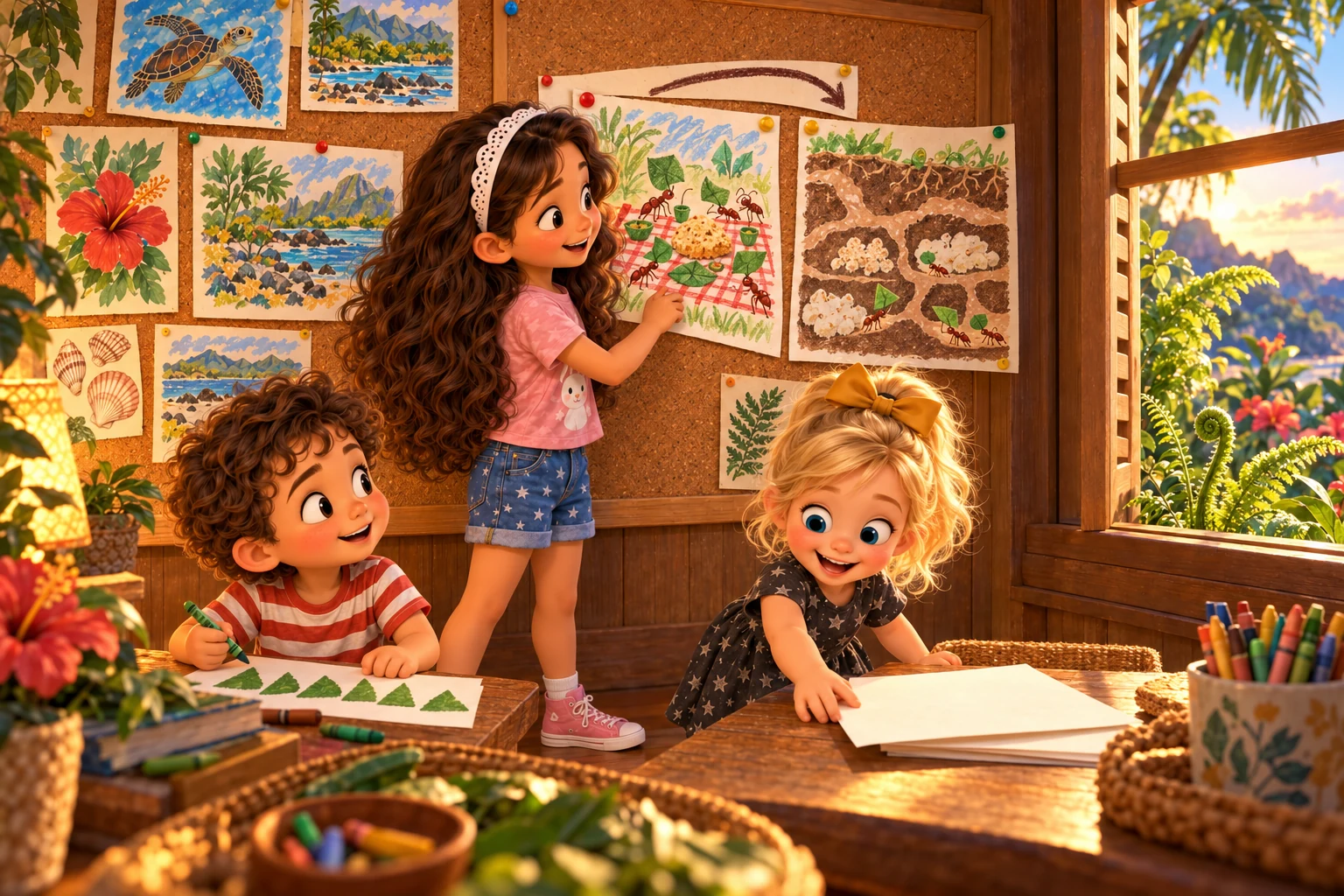
The children keep picnic and fungus-garden drawings connected by an arrow on their Wonder Wall, with a curled fern visible outside.

Page 08

Two pictures, one discovery

Both pictures went on the Wonder Wall.

The picnic guess. The hidden garden.

Charlotte drew an arrow between them.

Liam added a parade of green triangles, right across the page.

Then he spotted something through the window.

A new fern frond was curled like a tiny fist.

“What’s that leaf waiting for?”

Grace reached for another sheet of paper.

For curious families

A garden beneath your feet

The real leafcutter ants behind our imagined parade.

Meet the leafcutters

The story imagines a fictional coastal mainland garden in tropical America and draws on leafcutter ants of the genus Atta. These ants cut and carry fresh plant material to their nests. Leafcutters are one group of ants, so the story does not imply that every ant you meet farms fungus. The illustration is not a species-identification guide.

Why carry leaves underground?

Inside the nest, workers prepare plant fragments and add them to fungus gardens. The cultivated fungus grows through this material and produces nutritious structures eaten by the ants. This partnership, in which both organisms benefit, is called mutualism. The book scenes supply the hidden explanation; watching ants enter a hole cannot establish it by itself.

A careful word about food

“The ants feed their garden, and their garden feeds the ants” is the child-friendly core of the story. Adult leafcutter nutrition is more complex: workers may also obtain liquids from plants, and the relative contribution of different foods varies. We therefore do not say that these ants never consume plant fluids or that every worker eats only fungus.

What the garden looks like

The nest cutaway is an explanatory drawing, not a nest the children opened. Leafcutter fungus gardens can look like pale, irregular, spongy masses with bits of plant material. They are not rows of vegetables or a patch of familiar capped mushrooms. Fungi obtain nutrients from other organic material rather than making food through photosynthesis as green plants do.

A guess can lead somewhere

Charlotte’s picnic is an imagined explanation, clearly shown as a sketch. The ants’ actual behavior raises a new question, and the family consults a nature book. Keeping both drawings helps children distinguish an initial idea, an observation, and an explanation supported by research.

Watch without changing the story

Give wildlife space and leave its route and habitat undisturbed. Do not offer food, collect insects, or uncover a nest for a closer view. The activity works entirely on paper; its optional outdoor observation is only for a safe place selected and supervised by a grown-up.

Sources for grown-ups
Draw a guess, then a discovery Read again