← Stories

The Rock That Blinked

Discover more

Swipe to turn the page · Scroll to read
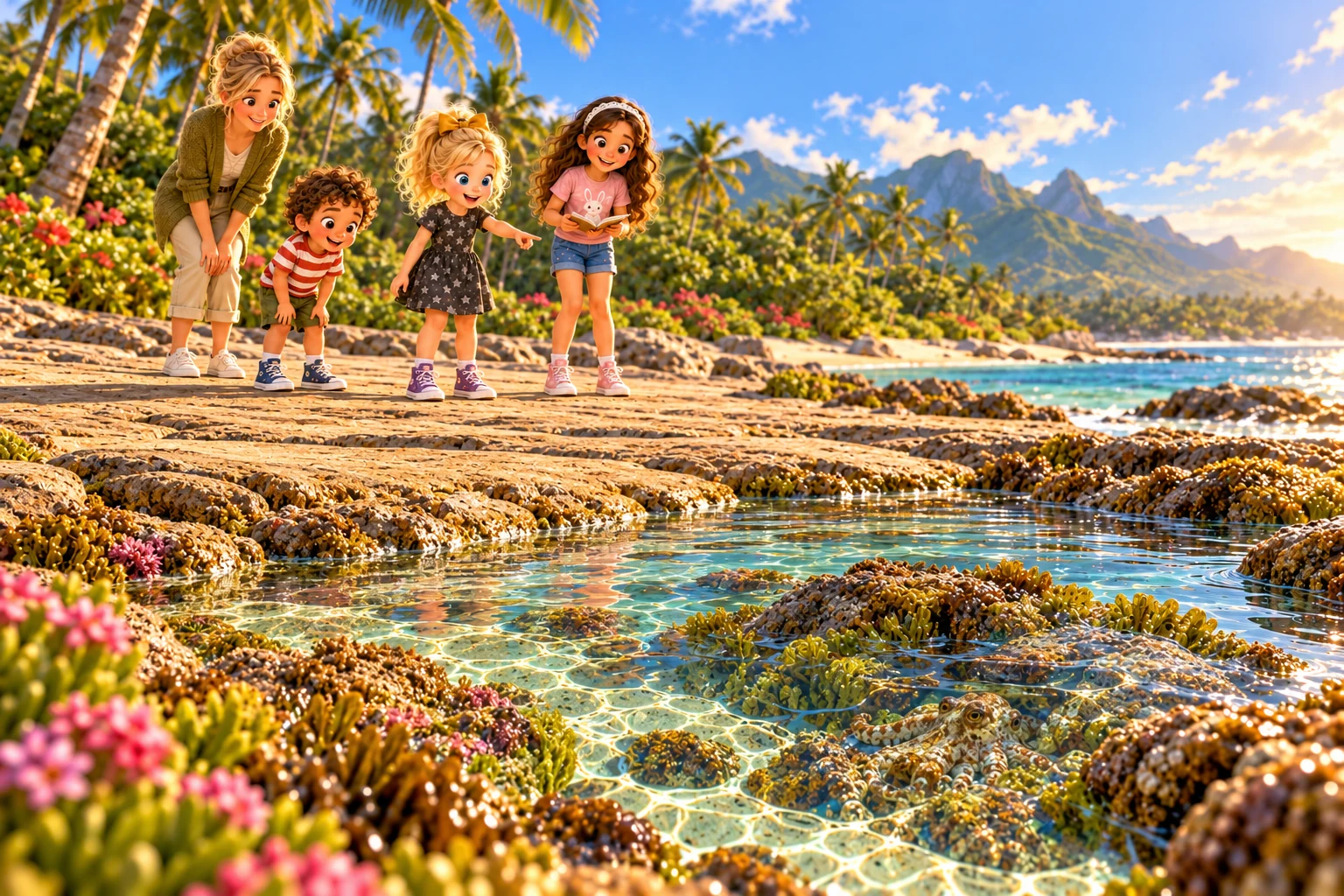
Grace points out a rock-like shape beneath clear coastal water while Charlotte, Liam, and Mom stand well back on the broad dry shore.

Page 01

That rock has an eye

Grace was watching the clear water when a rock blinked.

She blinked back.

“Charlotte. That rock has an eye.”

Charlotte looked up from her notebook.

“Which rock?”

Grace pointed from their dry, safe spot, well back from the water. Mom stood beside them.

“The one that just looked at me.”
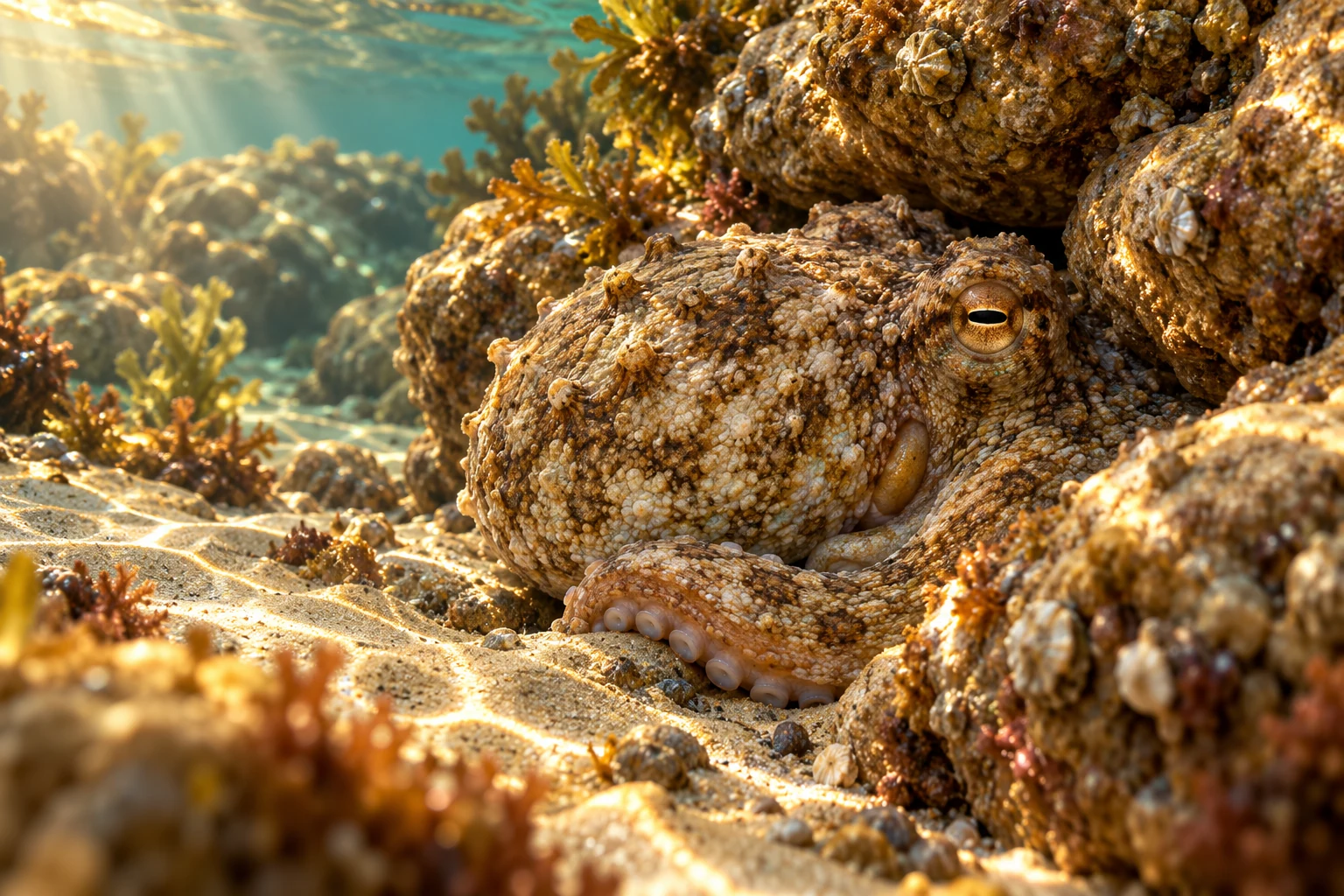
A brown, mottled octopus blends with underwater rocks; one natural eye and a curling arm with pale suckers provide clues.
An underwater close-up for us. The children watch from their dry, safe spot on shore.

Page 02

A curl at the edge

Brown. Blotchy. Bumpy.

At first, Charlotte saw only stones.

Then Grace spotted a little curl.

“Rocks don’t curl at the edges.”

Liam tucked both hands under his bottom and peered from beside Mom.

The curl stretched. Tiny pale circles showed underneath.

Grace’s whisper wiggled with excitement.

“Look, look… look again!”
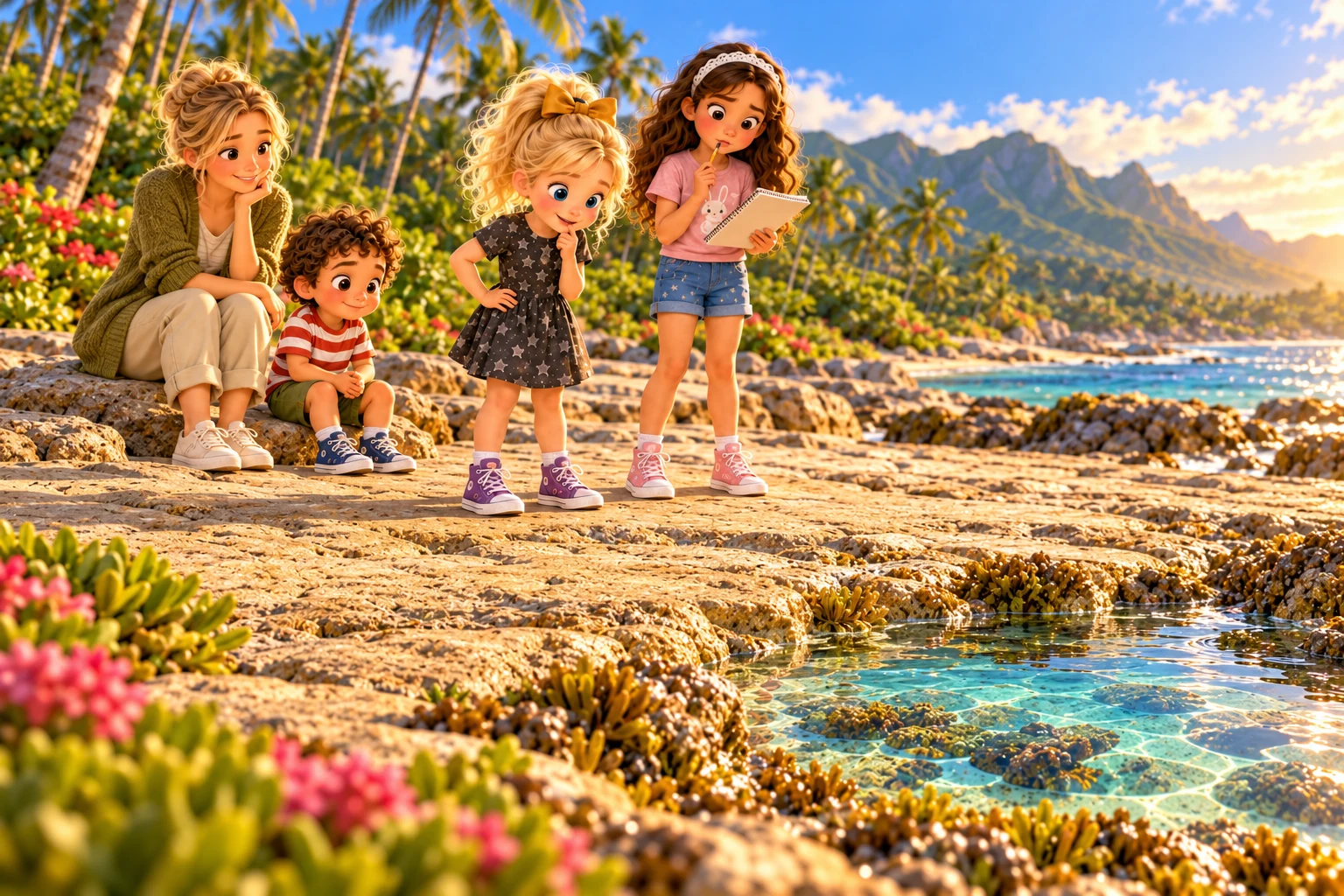
Grace studies the water from a safe dry place as Charlotte pauses with her notebook and Liam waits beside Mom.

Page 03

Pause & Wonder

Charlotte’s pencil hovered.

“A moving rock?”

“Something hiding,” Grace said.

She kept watching the same patch of water.

An eye. A curling edge. Pale little circles.

The clues belonged together. But how?

What do you think Grace has found? Which clue helped you?

Liam waited so quietly that even his shoes stayed still.

Pause & wonder

What do you think Grace has found? Which clue helped you?
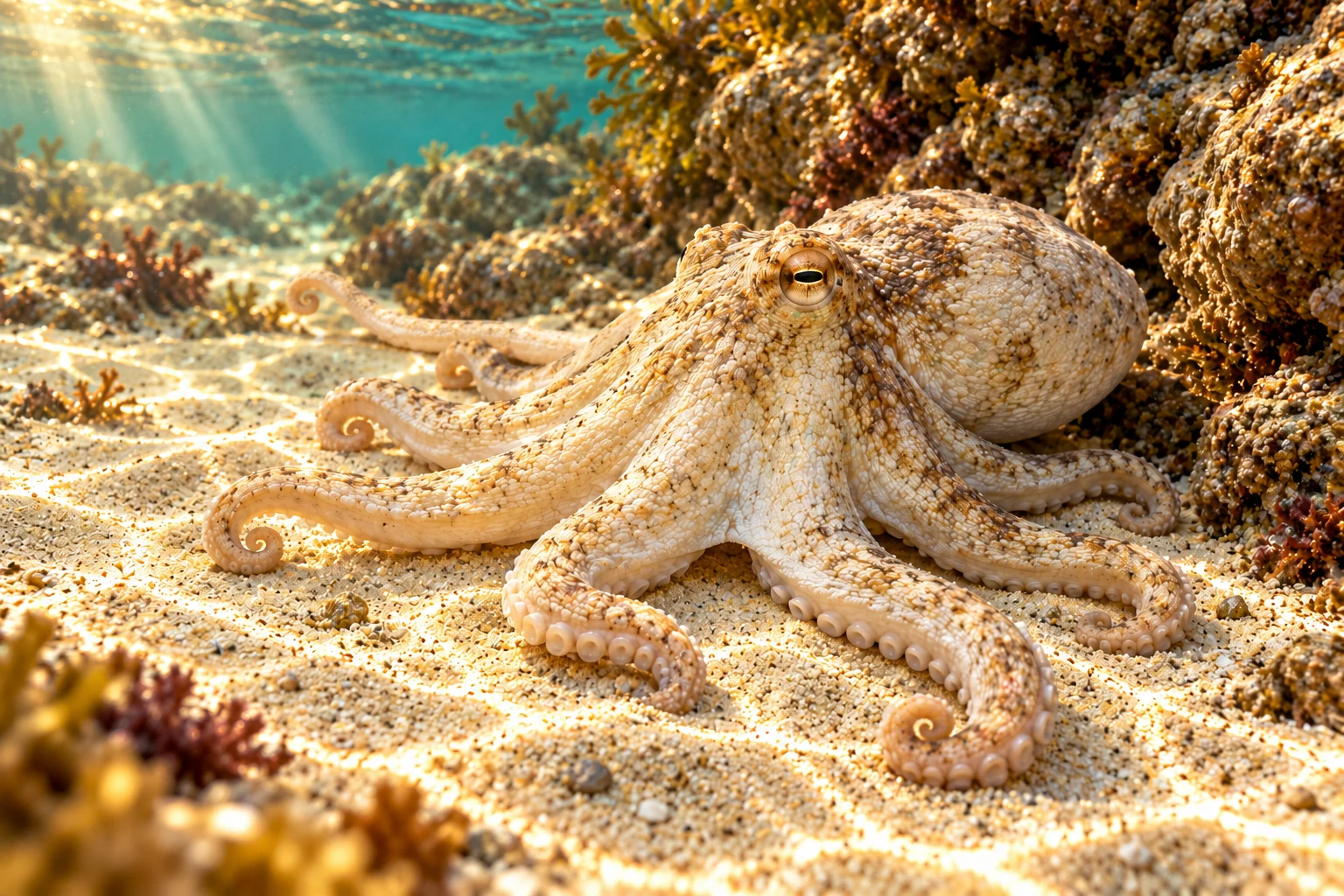
The octopus crawls onto pale underwater sand, revealing its eight sucker-lined arms and a paler, smoother appearance.
An underwater close-up for us. The children watch from their dry, safe spot on shore.

Page 04

Eight arms, one surprise

An arm slipped over the sand.

Then another.

The brown bundle opened into an octopus.

“Eight arms!” Charlotte said.

Liam held up his fingers, then borrowed some of Grace’s.

But Grace was watching its skin.

Over the pale sand, the octopus looked paler. Its bumps flattened.

“Same animal,” she whispered. “Different look.”
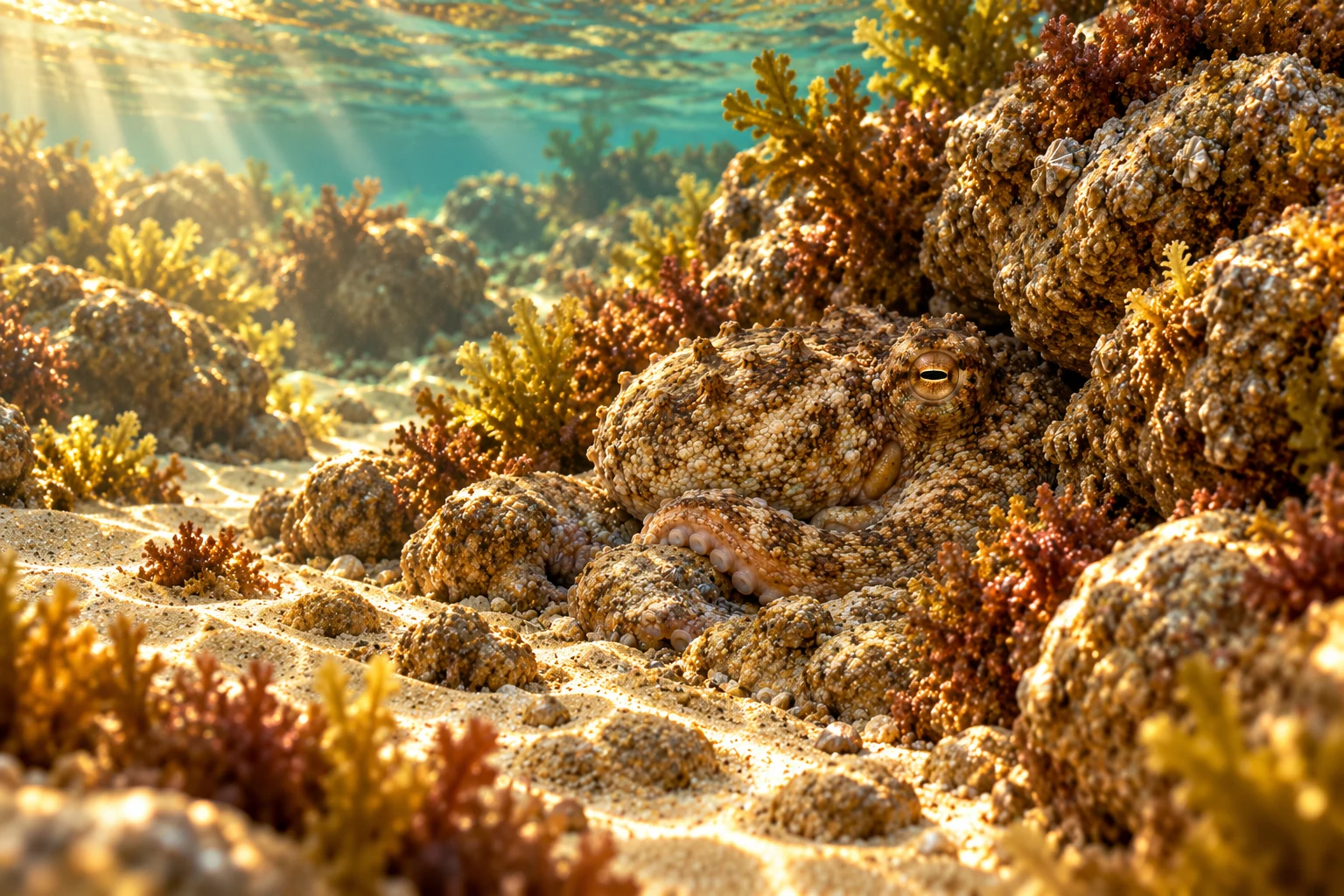
The same octopus rests beside a knobbly underwater rock, with brown patches and raised skin bumps making its outline difficult to see.
An underwater close-up for us. The children watch from their dry, safe spot on shore.

Page 05

Still there

It crept beside a knobbly rock.

Brown patches spread across its skin. Little bumps rose.

The octopus’s edges grew hard to find.

“Where did it go?” Liam asked.

Grace kept her eyes on one small spot.

“It’s still there.”

She smiled.

“It didn’t become a rock. It just looks like one!”

“Camouflage,” Mom whispered.
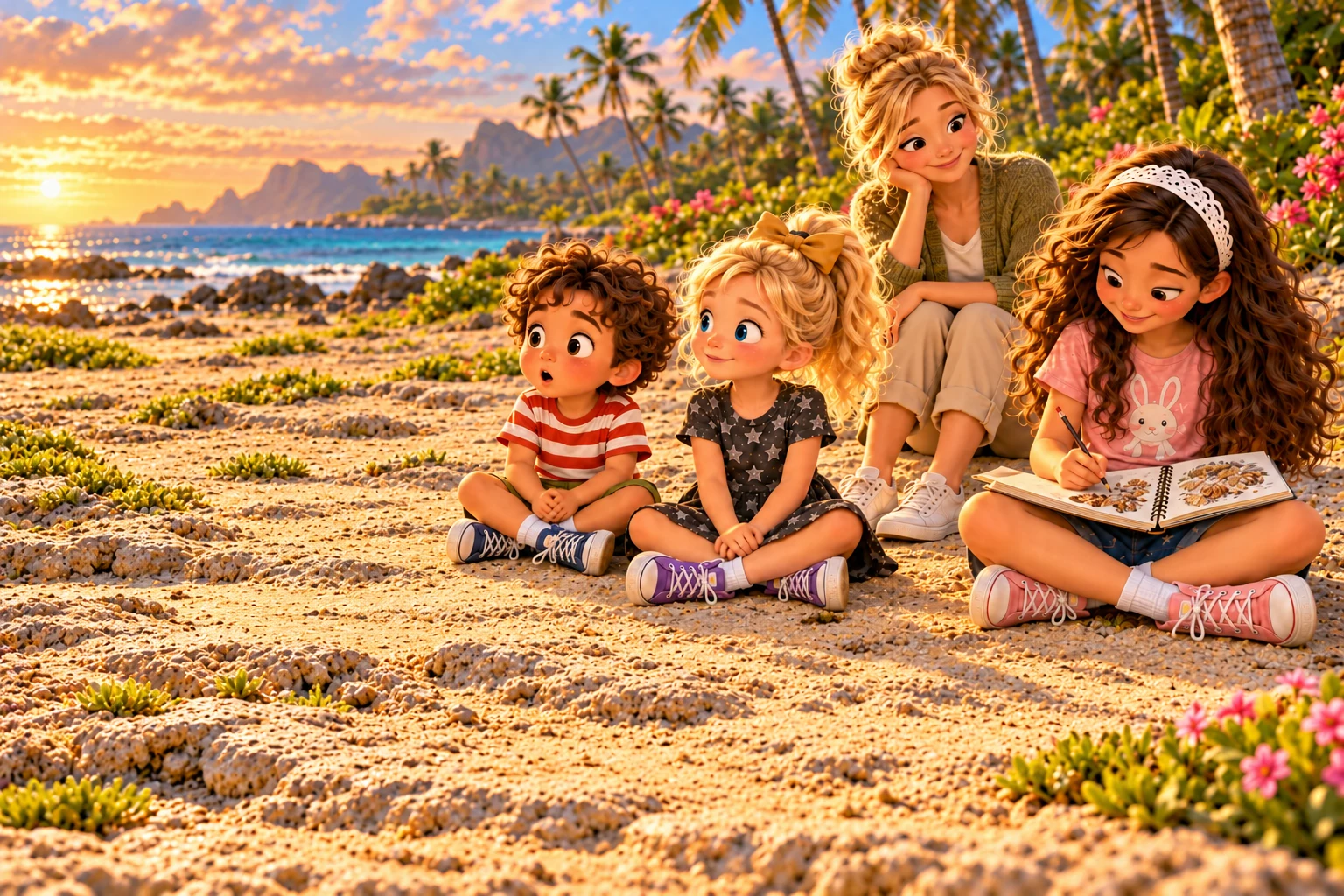
Grace quietly helps Liam spot the hidden octopus while Charlotte sketches; the family stays seated well back on dry shore.

Page 06

Find the eye

Liam looked left.

He looked right.

“Look, look… look again!” Grace whispered.

“Find the eye.”

“Oh!”

Liam’s mouth made a little moon.

Charlotte began drawing brown patches.

“Does looking like a rock help it hide?”

“Hard to spot, hard to catch,” Mom said.

Grace rested her hands in her lap.

“We can let it stay hidden.”
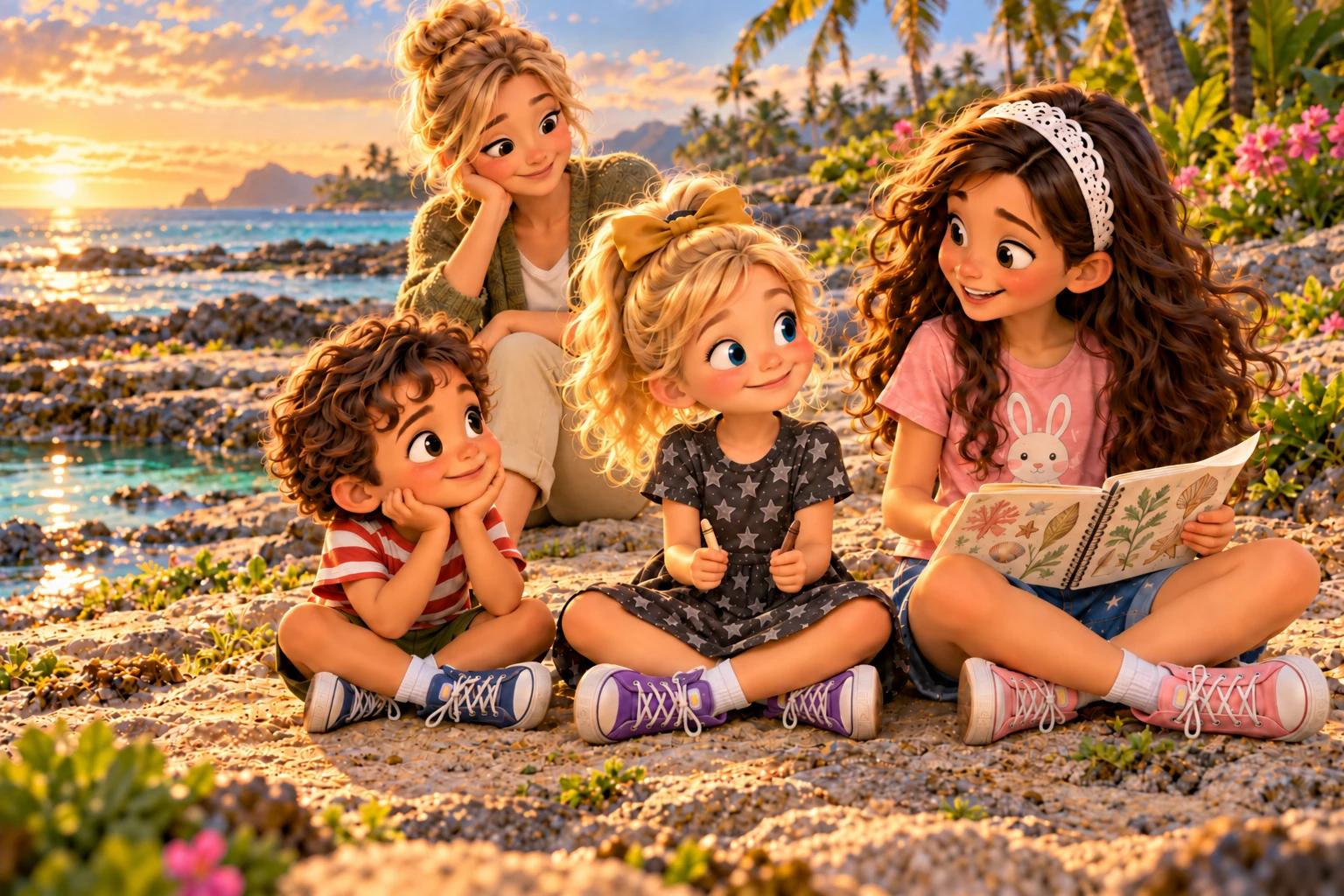
Charlotte smiles at Grace’s discovery as Grace chooses cream and brown crayons, with Liam and Mom beside them on the dry shore.

Page 07

A little longer

They watched without touching, splashing, or moving closer.

A breeze lifted the corners of Charlotte’s notebook.

“I nearly walked past,” she said. “You noticed.”

Grace felt a warm fizz inside.

She hadn’t made the biggest noise.

She hadn’t found the biggest thing.

She had looked a little longer.

Then she borrowed two crayons: sandy cream and rocky brown.
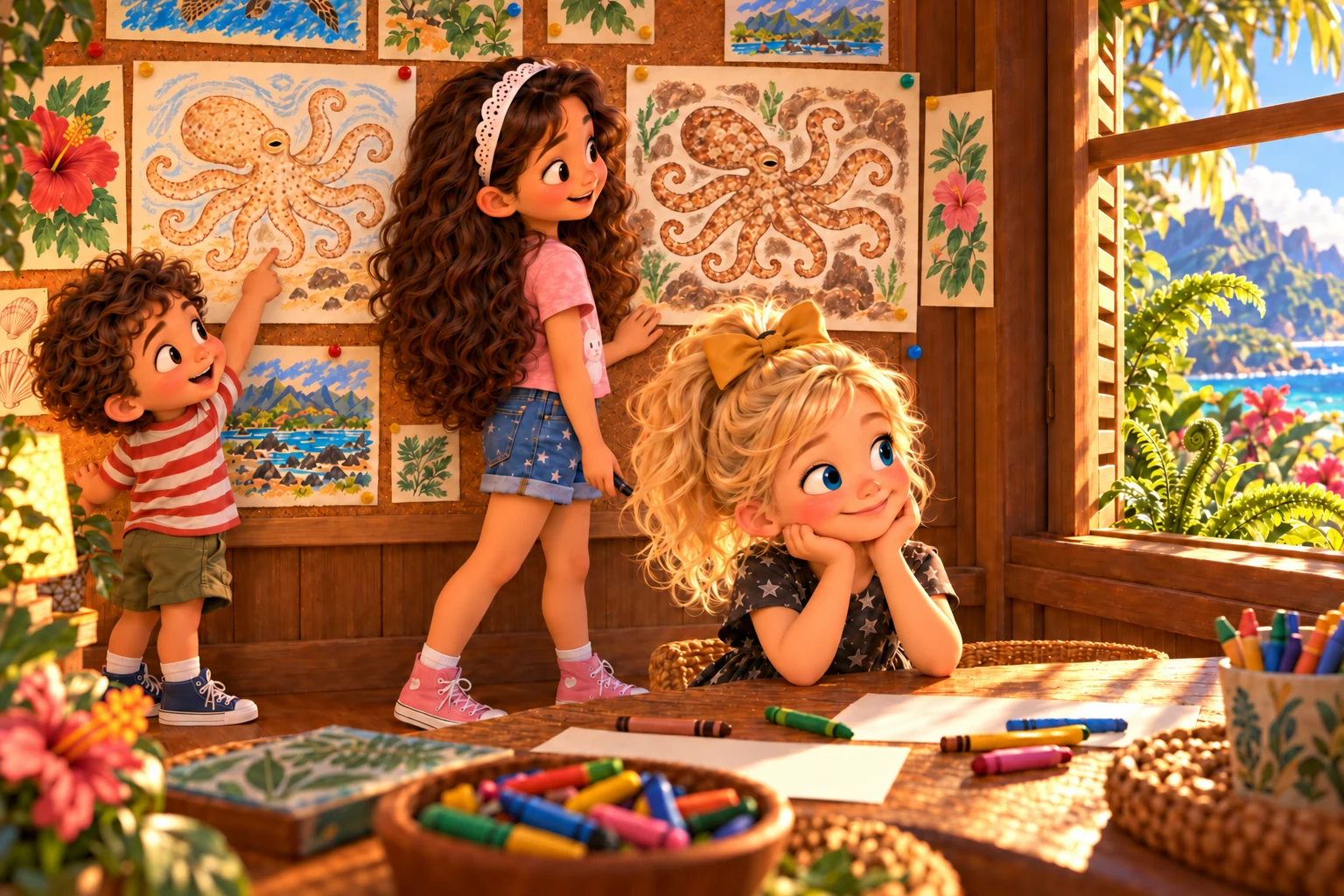
Grace’s Wonder Wall displays two drawings of the same eight-armed octopus, one pale on sand and one brown and mottled beside rocks, as the children look closely.

Page 08

Two pictures, one octopus

At home, Grace made two pictures for the Wonder Wall.

One octopus, pale and smooth.

The same octopus, brown and bumpy.

Liam counted the eight arms in each.

Charlotte added a tiny eye.

“Look, look… look again!”

Outside, sunshine moved across the garden.

Grace paused at the window.

How many other wonders were hiding in plain sight?

For curious families

A master of hide-and-seek

The real camouflage behind Grace’s surprising discovery.

A tropical camouflage expert

This fictional encounter is inspired by the day octopus, Octopus cyanea, which lives in tropical Indo-Pacific waters, including Hawaii. Unlike many octopuses, it commonly forages in daylight. Monterey Bay Aquarium describes its ability to resemble surrounding rocks, corals, and algae. The story does not promise that an octopus will be visible on any particular shore visit.

Eight arms, not eight tentacles

Octopuses have eight arms. Their arms bear suckers along their length, whereas the specialized feeding tentacles of squid and cuttlefish carry suckers mainly toward their tips. Arms can curl or overlap, so all eight are not necessarily visible at once in a real animal. Count the clearly drawn arms in the paper activity rather than approaching wildlife for a better count.

Color and pattern come from living skin

Pigment-containing structures called chromatophores contribute to rapid changes in octopus color and pattern. Muscles expand or relax the pigment sacs, changing how much pigment is visible. Other skin structures also affect the appearance. The octopus has not changed into stone, put on a costume, or become invisible; its appearance can make its outline harder to detect.

The bumps can change too

Many shallow-water octopuses can alter skin texture using muscular projections called papillae. A day octopus can produce pronounced bumps and ridges. Color, pattern, texture, and posture work together in camouflage, which can help an octopus avoid detection by predators or prey. The children's two pictures simplify these changes; the crayon activity models color and pattern, not living skin mechanics.

What does a blinking rock mean?

The title describes Grace’s first impression of an eye in a rock-like animal. Octopus eyes are not human eyes with eyelashes. Hanke and Kelber’s review describes a ring-shaped muscular skin fold in the common octopus that can close over the eye, and considers this likely in other octopods. The story uses “blink” as a child’s description, rather than claiming that a day octopus blinks in exactly the human way.

A discovery can stay undisturbed

The children watch from a safe dry place with their mother; the close-up illustrations are storytelling viewpoints, not places the children enter. Camouflage should never be induced by touching, chasing, or startling wildlife. Give animals space, leave their habitat intact, and follow local shore guidance. The activity works entirely on paper, and an eye or pattern in a drawing is not a reliable guide to identifying a wild species.

Sources for grown-ups
Hide an octopus on paper Read again